

ARUMC Clergy Gather in Covenant, Calling and Connection
Clergy members from across the Arkansas Conference of the United Methodist Church gathered Monday morning to begin the 2026 Annual Conference, reaffirming their shared calling and celebrating the connections that sustain ministry throughout the state.
Bishop Laura Merrill welcomed colleagues by noting the joy of gathering once again for worship, fellowship and the work of the conference. The session emphasized the importance of connectional ministry and the ways clergy support one another through every stage of their vocational journey.
The morning opened with prayer led by Rev. Mark Norman, chair of the Board of Ordained Ministry, who reminded those gathered that ministry is never carried out alone. Clergy then renewed their covenant commitments, reaffirming their dedication to faithful leadership, discipleship, service and accountability within The United Methodist Church.
Throughout the session, conference leaders celebrated milestones in clergy formation and ministry. Eleven individuals were recognized for completing Licensed Local Pastor School, and conference members approved new provisional members and candidates continuing their journey toward ordination. Several clergy transferring into the Arkansas Conference were also welcomed.
2026 Licensed Local Pastor School Graduates
- Rebecca Cox
- Riley Harris
- Crystal Jolly
- Danny Rainwater
- Keith Renard
- Michael Robinson
- James Sawyer
- Donna Shepherd
- James Weatherall
- Tasha Weeks
- Margarette Williams
The conference honored Rev. Dr. Rebekah Miles as the recipient of the 2026 Barnabas Award, recognizing her decades of service encouraging and mentoring those called into ministry. Leaders also celebrated milestones in the life of the church, including 70 years of full clergy rights for women and 30 years of the permanent Order of Deacons.
Presentations throughout the morning highlighted the importance of clergy care and support. Rev. Katie Pierce encouraged contributions to the Clergy Covenant Fund, which assists clergy and their families during times of crisis, while Rev. Dane Womack shared reflections on the value of spiritual renewal leave and caring for one’s well-being in ministry.
A recurring theme throughout the session was hope for the future of the church. Rev. Steve Poarch reminded clergy that God continues to call faithful disciples into ministry and equip them for service despite the challenges facing the church and the world.
“God is still God, and God is still calling faithful disciples into vocational ministry,” said Rev. Poarch.
The session also honored retiring clergy, remembered colleagues who died during the past conference year, and celebrated the ministries that continue to shape congregations across Arkansas.
2026 Retiring Clergy
- Paul Coy
- Pamela Estes
- Jeffrey Hampton
- Edna Hargraves
- David Hoffman
- Gary Maskell
- Beth Perdue
- Michael Roberts
- Betsy Singleton
- Paul Strange
- Tom Sullinger
- Beth Waldrup
As the gathering concluded, Bishop Merrill encouraged clergy to nurture their relationships with one another throughout the conference, reminding them that connection remains at the heart of United Methodist ministry.
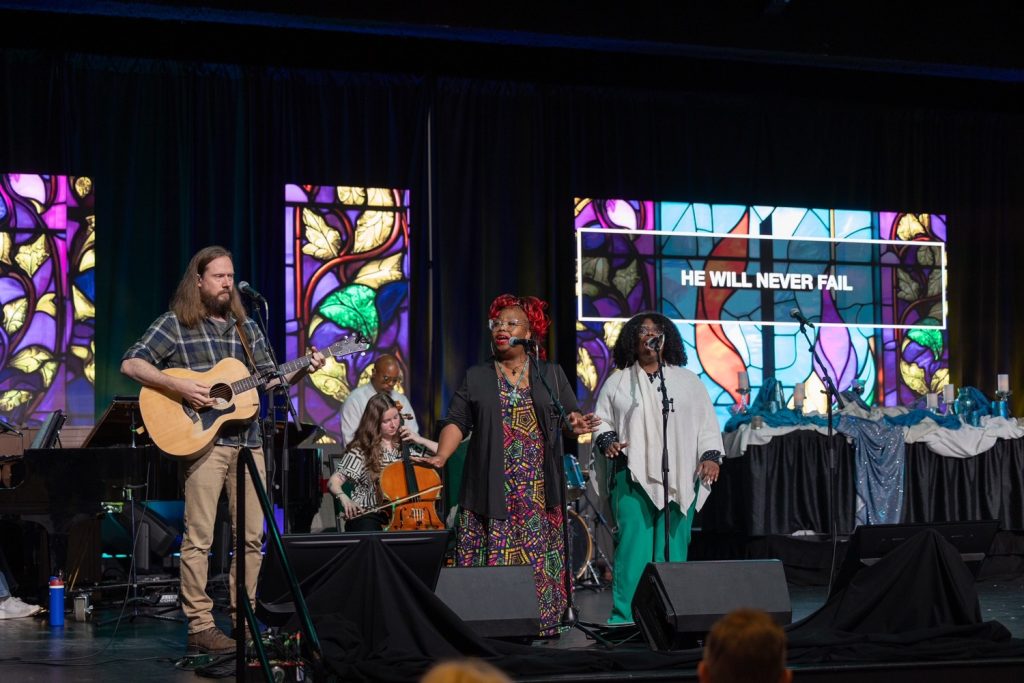
Conference Opens with Worship, Communion, Call to Live as Citizens of God’s Kingdom
The 2026 Arkansas Annual Conference officially opened Monday morning with worship and Holy Communion, gathering clergy and laity around the conference theme, The Way of Love: Flowing as One.
Drawing from Matthew 13:33, Bishop Laura Merrill reflected on Jesus’ parable of the yeast, inviting conference members to consider how God’s kingdom grows through small acts of faithfulness, connection and love.
“The kingdom of heaven is like yeast,” Bishop Merrill said, noting that in some translations the word is rendered as “sourdough,” a living starter that must be nurtured and sustained. She compared the kingdom of God to a living presence that grows, spreads and nourishes others when cared for intentionally.
“The kingdom of our God is like a loaf that will rise and another that will rise behind it to feed all the hungry, broken-hearted people who gather at the table,” Bishop Merrill said.
Throughout the sermon, Bishop Merrill connected the image of bread to the church’s calling to feed both physical and spiritual hunger. While acknowledging the many challenges facing the world, she reminded worshipers that Christians are people of resurrection hope.
“We are Easter people. We are Pentecost people. We are Christ people of the open table,” she said.
The bishop reflected personally on the loss of her mother earlier this year and the death of her sister-in-law, sharing how God’s presence sustained her through grief and reminded her of the enduring reality of God’s kingdom.
Worship also highlighted ministries supported by the Arkansas Conference, including Project Transformation Arkansas, whose participants shared testimonies about the impact of the program in their lives. An offering was collected to support the ministry’s ongoing work with Arkansas’s under-resourced children and families.
Music led by the conference worship team invited participants into a spirit of praise and trust, while Holy Communion united conference members around Christ’s table as they began their work together for the week.
As worship concluded, Bishop Merrill reminded attendees that God’s kingdom is not a distant reality but a present invitation.
“His kingdom is among us. His realm is at hand. His reign is within us,” she said.
 Transcript of Bishop Laura Merrill’s Opening Worship Sermon
“…What a joy it is to see you all together in this place. It is truly my gift and pleasure to gather with you at this Annual Conference, especially to begin this plenary time with Holy Communion.
“Many of you know that my mother died back in January. I am still beautifully blessed by all the time we spent traveling together, especially the driving we did in Oklahoma and Arkansas. Once I became a bishop, Mama loved getting in the car with me and going to visit churches. She was always sure she had already been there before or that she had met one of those people because they looked so familiar.
“Our last trip together in Arkansas was to worship in Arkadelphia on Christ the King Sunday right after Thanksgiving. I will never forget sitting next to her, singing alto to her soprano on those hymns that day.
“Less than two weeks after my mother’s death, I attended a meeting of United Methodist leaders in Copenhagen. The meeting began on what would have been my mother’s 87th birthday. It was also the 20th anniversary of my breast cancer journey, for which today I am free, thank God.
“That same day, I learned that my sister-in-law, who had been living with breast cancer for five years, had died.
“I was overwhelmed with gratitude for my life and my body. I was overwhelmed with gratitude and grief for the lives of my mother and my sister-in-law.
“That day, our worship centered on Matthew 13:33: the kingdom of heaven is like yeast that a woman took and mixed in with three measures of flour until all of it was leavened.
“The kingdom of heaven is like yeast.
“A friend from Norway pointed out that in Norwegian translations this word is often rendered as ‘sourdough.’ The kingdom of heaven is like sourdough.
“Sourdough begins with a starter – flour and water – that captures wild yeast from the air. It grows. It lives. It must be nurtured and fed. One friend has had the same sourdough starter for more than twenty years. Someone must care for it, feed it, and help it thrive.
“The kingdom of heaven is not like a little dead packet of dry yeast sitting on a pantry shelf. The kingdom is a living thing that grows, even by surprise, taking life from the invisible air itself. It must be nurtured, protected, fed, and tended with intention.
“The kingdom of our God is like a loaf that will rise, and another loaf that will rise behind it, to feed all the hungry, brokenhearted people who gather at the table.
“This world is hungry.
“There are actual human bodies hungry for actual bread. They are here in Hot Springs. They are across Arkansas and throughout the world. United Methodists do a pretty good job of sharing actual bread with them.
“But people are hungry in their hearts, too.
“We hunger for home and safety. We hunger for belonging and kindness. We hunger for meaning that stretches beyond ourselves. We hunger for joy.
“And all of this takes place in a world stalked by death.
“Yet we are Easter people.
“We are Pentecost people.
“We are Christ people of the open table.
“Christ has invited us into His gracious realm, a realm that thrives and grows in the midst of everything else.
“Imagine how our church might look if we walked around every day like people who belong to that kind of kingdom.
“A kingdom led by One who welcomed outsiders.
“One who forgave every kind of sinner – including our kind.
“One who challenged the powerful and invited them to become part of God’s work.
“What if we carried that identity within us – living, fermenting, and growing?
“The kingdom of God is at hand.
“We will sing and learn and remember during this conference the kind of love that makes us who we are. We can know the triumph of that love, the victory of that grace, the power of that humility, the miracle of bread that fills our need, and the gift of Christ’s own body to Christ’s own people.
“Death cannot hold those whom Christ has claimed.
“Hunger cannot hold those whom Christ has fed.
“As citizens, neighbors, and family of the reign of God, may we live and eat and share and sing under the loving eye of our crucified and risen King.”
Bishop Laura Merrill Invites Conference to “Flow in the Way of Love”
 Bishop Laura Merrill challenged clergy and laity Monday afternoon to embrace the Wesleyan way of love, resist division and trust God’s work in a changing world during her Episcopal Address at the 2026 Arkansas Annual Conference.
Drawing on the conference theme, The Way of Love: Flowing as One, Bishop Merrill reflected on her relationship with the Arkansas River, using its steady movement as a metaphor for God’s love flowing through the church and the world.
“It seems like it should be easy,” Bishop Merrill said of love. “It’s all we want, really. To be seen as precious, to be known as valuable and to be loved.”
Yet the bishop acknowledged that love is not always humanity’s first choice. Instead, she said, followers of Christ are called each day to intentionally choose the path Jesus modeled: loving God and loving neighbor.
Throughout the address, Bishop Merrill testified to the ways she sees God’s love at work despite challenges facing both society and the church. She spoke candidly about personal grief following the death of her mother earlier this year, as well as concerns about declining compassion in public life and the pressures facing church leaders.
“In spite of myself and all the persistent evidence to the contrary, I am here today to testify to the fact that the love of God is very much alive and moving in us and in the world around us,” she said.
Bishop Merrill pointed to the United Methodist tradition as a source of hope and identity. She reminded conference members that Wesleyan faith is rooted in God’s grace, the open table of Holy Communion, the practice of social holiness and the belief that faith is lived through relationships with others.
She celebrated congregations across Arkansas and Oklahoma that are responding creatively to community needs. From repurposing church buildings for ministry and service to creating new opportunities for youth and community engagement, Bishop Merrill said churches are finding fresh ways to embody Christ’s love.
Particular praise was given for small and rural congregations that continue to build partnerships, feed hungry neighbors, care for the elderly and serve their communities through personal relationships and local connections.
“You are leveraging the relationships you have on the ground for transformational good,” Bishop Merrill said.
The bishop also addressed concerns about growing division within society, warning against ideologies that seek to separate people into categories of insiders and outsiders. She specifically cautioned against Christian nationalism, describing it as inconsistent with the welcoming and inclusive ministry of Jesus.
“What some are claiming as the best self of our nation looks nothing like the open table love that we perceive from Christ,” she said.
Quoting early Methodist Bishop Francis Asbury, Bishop Merrill encouraged conference members to seek unity through love rather than insisting on agreement in every matter.
“If we can’t be of one mind that we may agree, let’s agree that we may be of one mind,” she quoted.
Throughout the address, Bishop Merrill shared examples of ministry that give her hope for the future. She highlighted young adults entering ministry, youth becoming certified lay servants, congregations engaging immigrant communities and growing relationships with Native American United Methodists through the Oklahoma Indian Missionary Conference.
She described these ministries as evidence that God’s prevenient grace is already at work ahead of the church, preparing new opportunities for witness and service.
Bishop Merrill concluded by encouraging clergy and laity to care for themselves and one another as they navigate the challenges of ministry in a rapidly changing world. She reminded conference members that they are not alone and that God’s love remains constant.
“Give yourself to the flow of love, knowing it’s not your job to push the river,” she said.
As the conference continues, Bishop Merrill’s message serves as both a challenge and an invitation: to trust God’s grace, remain connected to one another and continue walking together in the way of love.
Conference Adopts Key Rules, Celebrates Lay Ministry and Receives Pension Report
 The Arkansas Annual Conference resumed business Monday afternoon with the adoption of conference rules, recognition of lay ministers and reports highlighting clergy well-being, pension updates and ministries focused on justice and inclusion.
Bishop Laura Merrill called the session to order following a prayer centered on the conference theme, The Way of Love: Flowing as One. The gathering formally adopted the conference agenda, consent calendar, session rules and standing rules that will govern the work of the annual conference throughout the week.
The session opened with a land acknowledgment presented by Rev. Dan Reed, chair of the Conference Committee on Native American Ministries. Reed recognized the Indigenous peoples who historically inhabited the region and encouraged conference members to move beyond acknowledgment toward education, reconciliation and meaningful relationships with Native communities.
Conference leaders also welcomed guests and local representatives, including officials from the Hot Springs Convention Center and youth representative Bella Braun of Hot Springs First United Methodist Church, who encouraged attendees to experience both the hospitality of the city and the fellowship of the conference.
A monitoring report from the Conference Committee on the Status and Role of Women highlighted demographic information about the annual conference membership and emphasized the importance of inclusion and representation. Chair Sarah Argue noted that 2026 marks the 70th anniversary of full clergy rights for women in the Methodist tradition and encouraged members to consider how the church continues to support the full participation of women in ministry.
One of the afternoon’s celebrations focused on lay leadership. Conference members recognized newly certified lay ministers Melissa High Simpson, Tim Morris, Angel Shaw and Janet Arnett. Leaders praised the role of lay ministers in leading worship, nurturing discipleship and extending the church’s ministry throughout Arkansas communities.
The conference also received a report from the Board of Pensions and Health Benefits. Board Chair Roy Smith outlined several initiatives designed to strengthen long-term retirement and health care support for clergy. Among the approved changes were an increase in pre-1982 pension benefits, the phased transition of the retiree health care stipend and the creation of health savings account opportunities for active clergy beginning in 2027. Plans were also announced for future health reimbursement accounts that could assist retired clergy with health care expenses. Following discussion, the conference approved the report.
Throughout the afternoon, members viewed presentations highlighting the work of Lay Servant Ministries, the Committee on Religion and Race, the LGBTQ+ Task Force and the Committee on Ecumenical and Interreligious Concerns. These reports emphasized the church’s ongoing commitment to leadership development, racial justice, inclusion, Christian unity and faithful engagement with communities across Arkansas and beyond.
As the session concluded, clergy were invited to participate in a fellowship gathering (Coffee with Clergy) designed to strengthen relationships across districts, ministry settings and generations of church leadership. The event reflected a recurring theme of the day: that the church’s ministry is strengthened when people walk together in faith, service and love.
Conference Celebrates Ministries of Compassion, Leadership Development and Global Mission
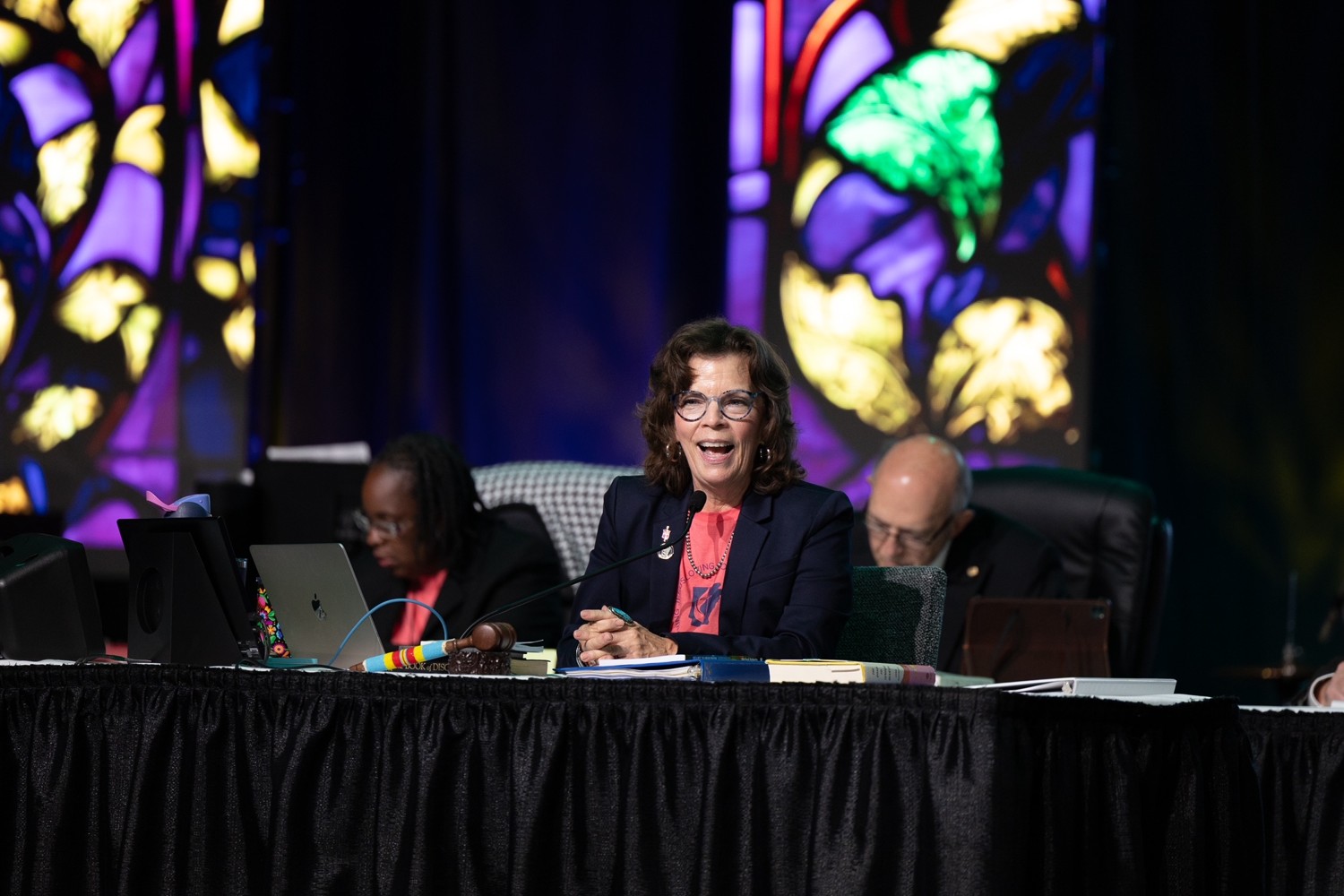 The final business session of the opening day of the 2026 Arkansas Annual Conference highlighted ministries that are transforming lives across Arkansas and beyond through leadership development, hunger relief, accessibility initiatives and global mission partnerships.
The session began with a moment of prayer led by Air Force Chaplain Ron Feeser following reports of a B-52 crash shortly after takeoff from Edwards Air Force Base. Conference members joined in silent prayer for the crew, their families and military personnel awaiting news of the incident.
Rev. U.C. Washington presented the report of the Black Church Initiative, celebrating efforts to support and mentor young African American leaders across the conference. The initiative sponsored youth participation in Veritas, Mission U and other leadership opportunities while building partnerships with churches, educational institutions and community organizations.
“Our purpose is empowering the next generation of African American leaders by walking with them in faith, hope and love,” Washington said.
The conference also received a report from 200,000 More Reasons, a ministry focused on eliminating childhood hunger and supporting vulnerable families. Samantha Menley reported that 83 percent of Arkansas United Methodist congregations offer ministries addressing food insecurity among children and families.
Through a partnership with the Methodist Foundation for Arkansas, 51 churches received grants totaling more than $50,000 this year to support local outreach efforts.
The ministry also presented the inaugural Mary Lewis Dassinger Seeds of Change Award to White Memorial United Methodist Church. The congregation’s bus stop feeding and literacy ministry serves more than 250 children each week, providing food, books and encouragement to families in the community.
Conference members viewed a report from the Committee on Disability Concerns, which highlighted significant progress in accessibility efforts across Arkansas churches. Participation in annual accessibility audits increased from 16.5 percent in 2024 to 69 percent in 2025. The committee also celebrated improvements including closed captioning at Annual Conference, sensory awareness initiatives and expanded accessibility resources for local congregations.
Bishop Laura Merrill encouraged churches to view accessibility as an expression of Christian hospitality and compassion.
“It doesn’t mean fixing everything in one day,” Bishop Merrill said. “It does mean thinking about the experience of others and making a place where all people can bring their giftedness and participate fully.”
The conference approved the report of the Commission on Equitable Compensation, which supports churches in providing fair compensation for clergy. Leaders announced a 3 percent cost-of-living increase for minimum clergy compensation levels, the first such increase since 2020.
The afternoon also included reports from United Women in Faith, the Clergy Care Task Force and the Board of Global Ministries.
The clergy care report highlighted resources available to pastors and celebrated leadership development programs designed to strengthen clergy resilience, emotional health and congregational leadership. A moving prayer written by Rev. Lynn Poplin reminded conference members of the importance of renewal and mutual support in ministry.
Global Ministries leaders shared stories of local and international mission work, including partnerships addressing hunger, immigration, health care and poverty. Conference members learned about opportunities to support missionaries, participate in Mission U and engage in mission partnerships throughout the world.
The session concluded with recognition of the 2026 Five Star Churches, congregations that demonstrated exceptional commitment to mission through financial support, outreach and engagement in global ministries. Fifteen Arkansas churches received the designation.
Conference members also welcomed Perkins School of Theology Dean Dr. Bryan Stone, who shared updates about theological education, expanded scholarship opportunities and new initiatives designed to prepare the next generation of ministry leaders.
The final action of the day was consideration of the Conference Council on Finance and Administration report. Leaders presented a proposed 2026-27 spending plan of approximately $5.78 million, representing a 3 percent decrease from the previous year while continuing to support conference ministries, leadership development and mission initiatives. The budget reflects the conference’s commitment to stewarding resources while prioritizing ministry in local congregations. It passed.