
Written by Michael McMurray
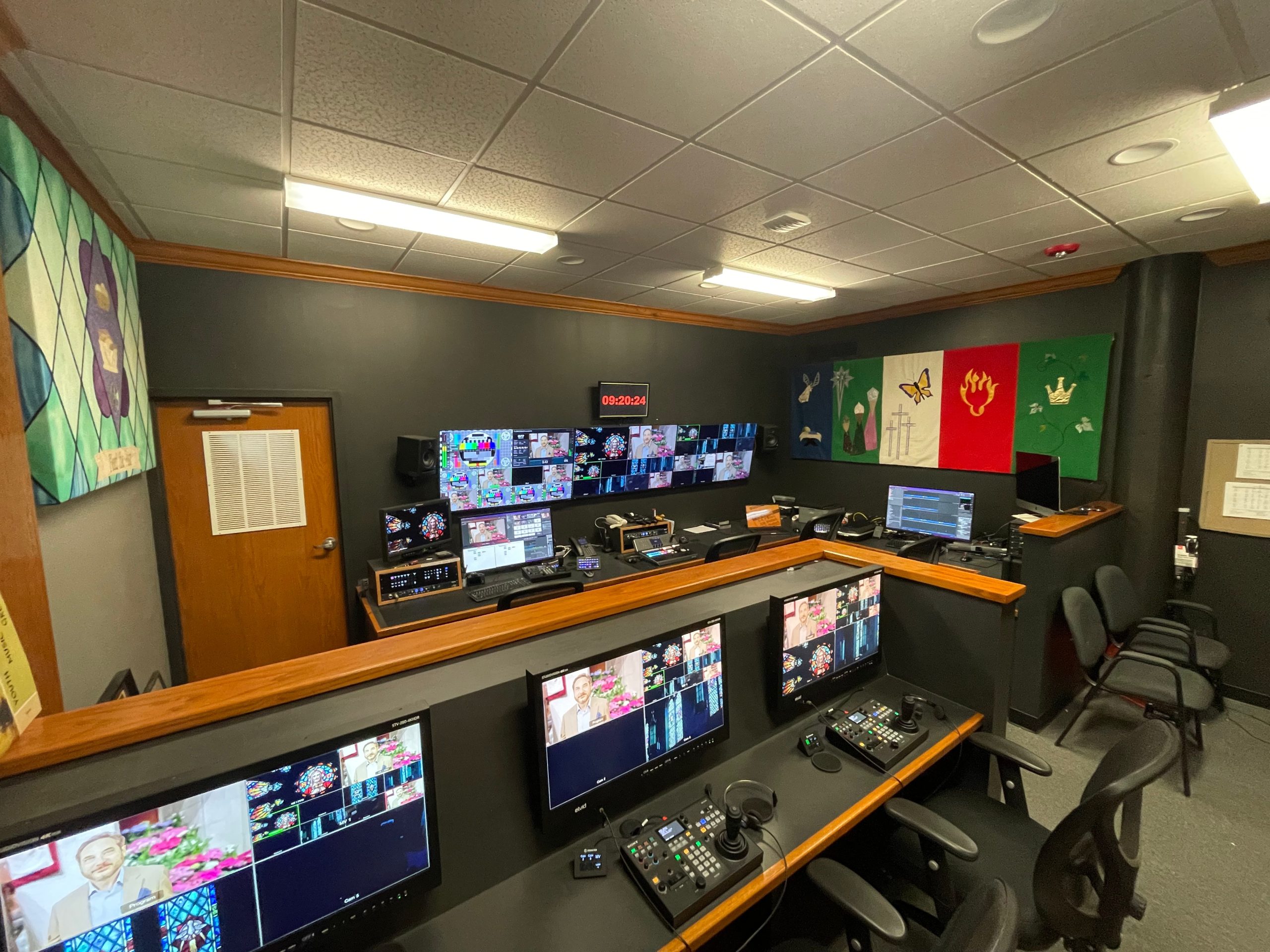
Beginning in 1960, Pulaski Heights United Methodist Church experimented with broadcasting our services. What started as periodic radio broadcasts became periodic telecasts and then became a bold vision in 1965 when the Administrative Board approved a request from Charles Meyer Jr. to raise money to begin broadcasting weekly. This was an innovative move led by then–Senior Pastor Dr. James B. Argue, who invited 30 members of the congregation to invest $1,000 each to bring the idea to life. Those significant contributions launched what has become one of the longest-running local church broadcasts in the country.
 On March 6, 1966, PHUMC stepped into that bold new chapter of ministry. With two secondhand black-and-white cameras purchased from a television station in Dallas and equipment set up in the balcony and a basement room, PHUMC broadcast its first regular Sunday morning worship service on Channel 4 (KARK). What began as a simple setup with bulky cameras and a small volunteer team quickly became a defining outreach of the church. In 1991, the Television Board of Directors was formed to oversee operations and funding, autonomous from the church operating budget, to ensure the ministry would remain strong for future generations.
What started as a local broadcast now reaches across Arkansas and far beyond. In the past year alone, PHUMC averages 28,237 viewers each week. With viewers tuning in from across Arkansas to Canada to the Philippines, this ministry makes PHUMC one of the most attended United Methodist congregations in the country. The broadcast is no longer simply a window into worship — it is a doorway. Over 80 members have joined the church without ever attending in person. What once allowed viewers to observe now invites them to belong.
As we celebrate 60 years of the Pulaski Heights Broadcast Ministry, we give thanks for the vision of those who launched it, the volunteers who have sustained it through more than 3,000 broadcasts, and the countless lives touched each Sunday morning. From two black-and-white cameras to a global digital reach, one thing has remained constant: the faithful proclamation of the Gospel of Jesus Christ.
When the proposal came before the Administrative Board in 1965, The Tower newsletter wrote, “Through this program, our church will have an almost unlimited potential for reaching thousands of persons not presently belonging to a church of their own”. Even they could not have imagined the tens of millions of viewers who would worship with PHUMC in the decades to come. And by God’s grace, the next chapter is just beginning.