
Written by Rev. Dr. Blake Bradford and Amy Ezell
The 2024 regular session of the Arkansas Conference will consider a proposal to redistrict the conference into four districts from the current five-district structure. This endeavor is a rightsizing and an adjustment based on our experience of losing churches due to disaffiliation over the last two years.
In this proposal, the Council on Finance and Administration, the Cabinet, and Bishop Merrill have worked together to place the needs of local churches and ministries first. They have created a four-district plan that encourages a healthy ministry of presence by District Superintendents, allows the district offices to best offer resources and support, and fulfills the equipping and connecting mission of the annual conference in a financially sustainable manner.
According to the Book of Discipline, the Annual Conference is the body that decides the number of districts, while the Cabinet is assigned the responsibility of mapping out the district lines.
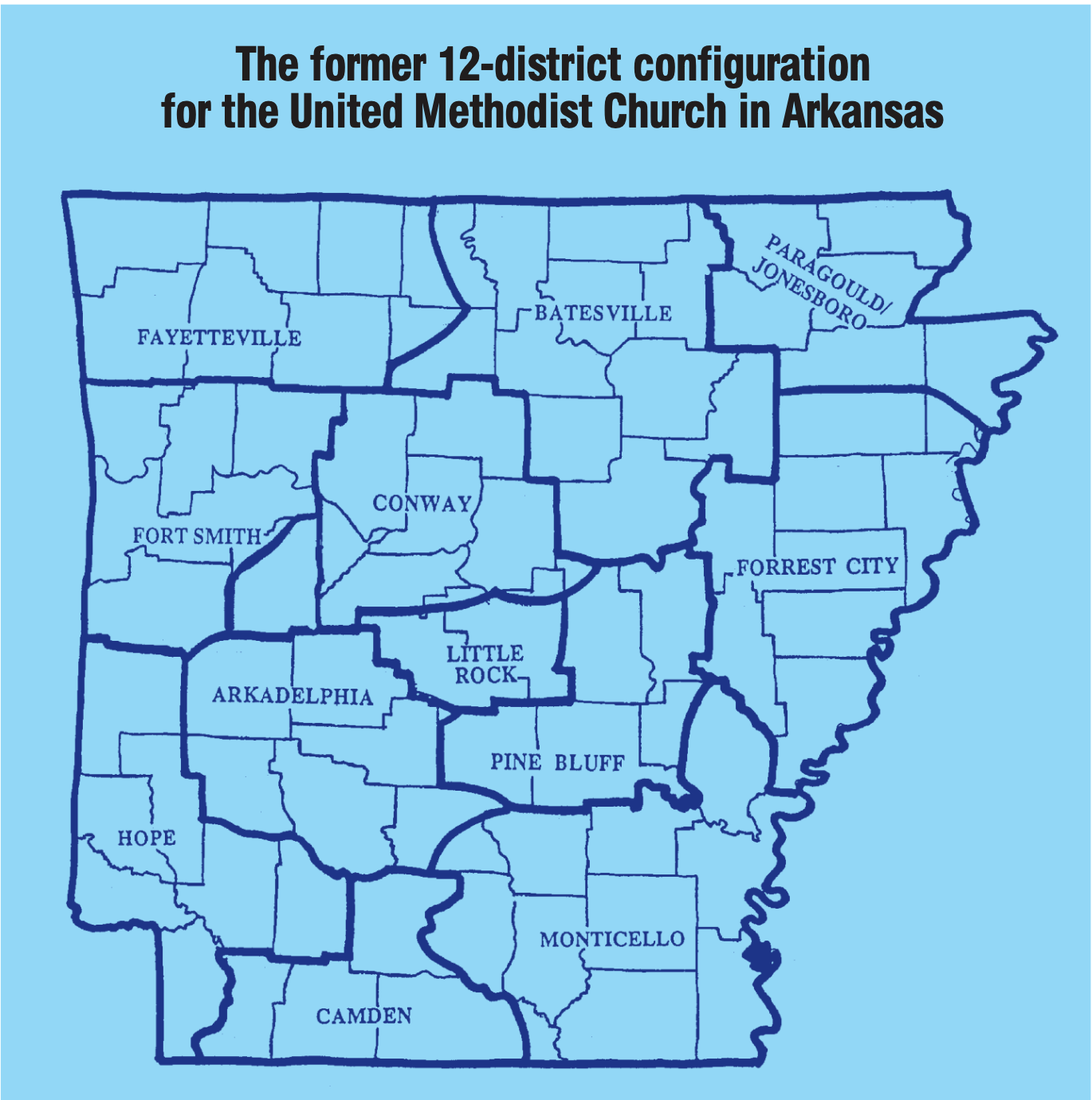
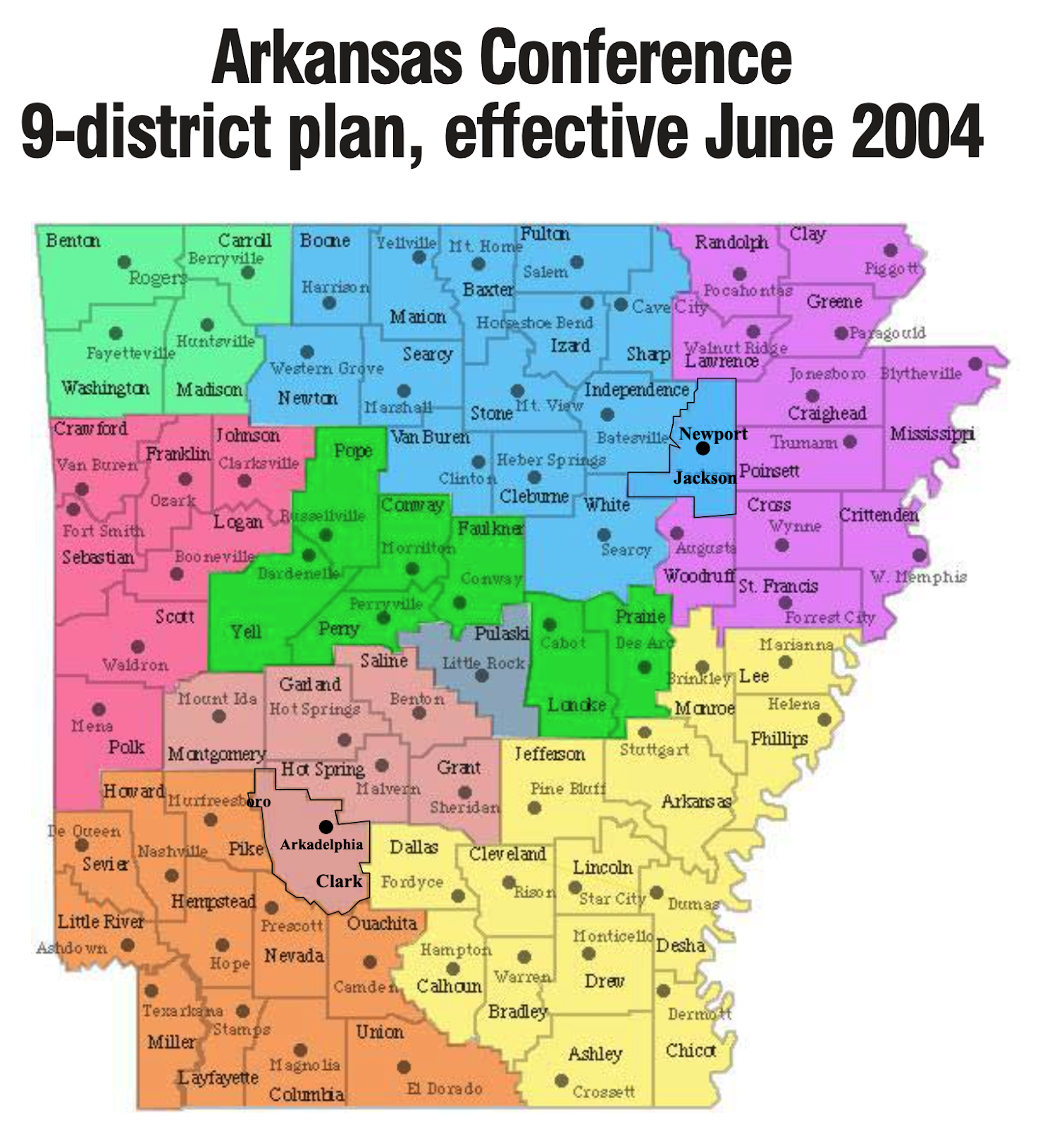
Historically, district lines have been shifted based on new approaches to the work of district superintendents, highways that changed travel patterns, demographic changes in the state, and district apportionments.
For example, after the 2003 union of the North Arkansas and Little Rock Conferences, the 2004 newly merged Arkansas Conference reduced the number of districts from 12 to 9. Later, in 2011, the conference decided to reduce further to five districts. Past redistricting meant more churches per district office and DS. Furthermore, all previous district maps were highly impacted by the need to have similar aggregate district apportionments in order to fund offices.
This redistricting project is different.
The season of disaffiliation has meant that approximately a quarter of our congregations have left the denomination. In response to this new reality, the district lines need to be redrawn, to better reflect our budget and the current locations of our congregations and ministries.
Under the existing five districts, after the impact of disaffiliation, the 2023 data is as follows:
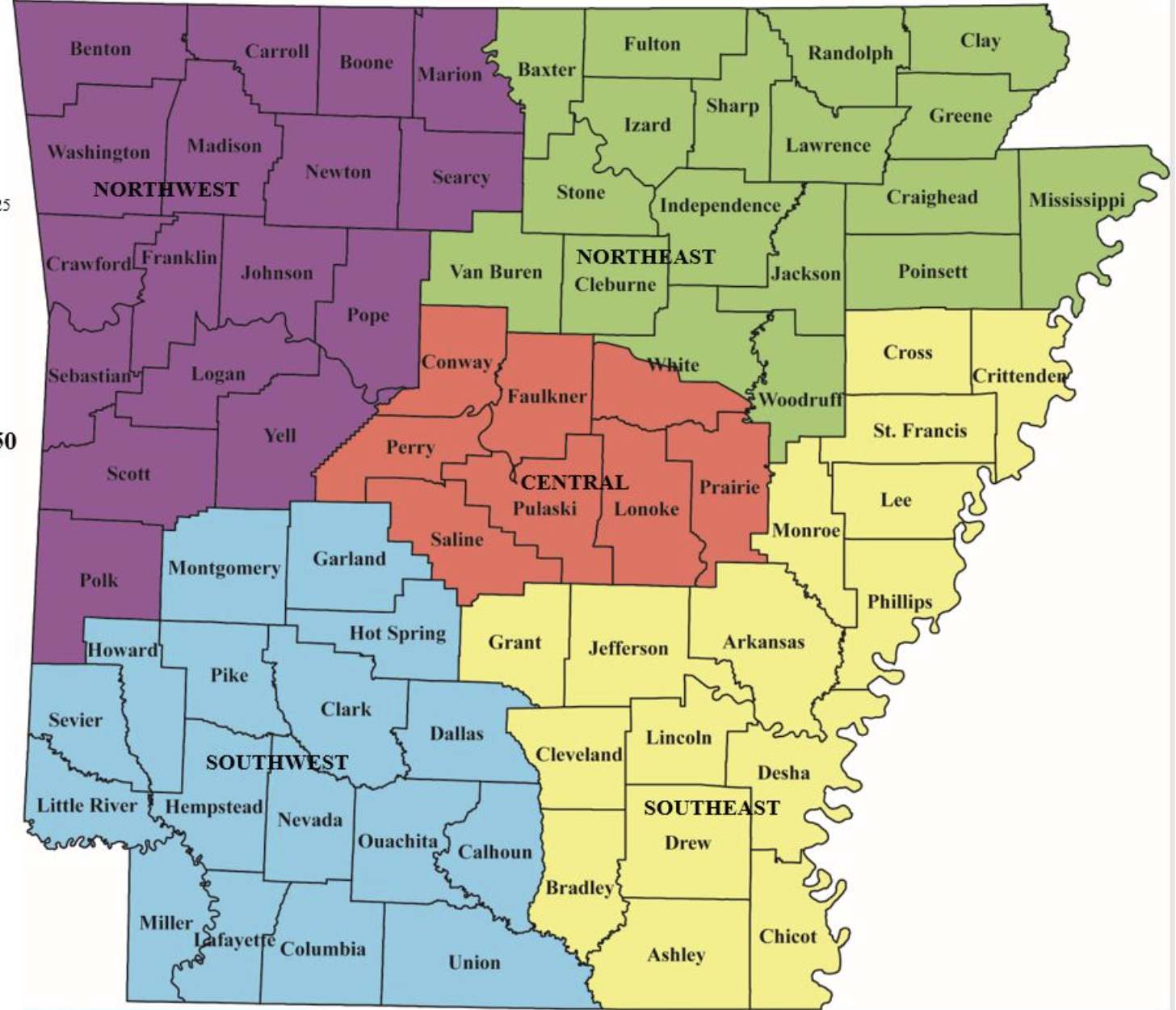
- Central District:
- 77 Churches
- 61 Charges
- 47 Full-Time Pastors
- 36 Part-Time Pastors
- Northwest District:
- 82 Churches
- 60 Charges
- 40 Full-Time Pastors
- 30 Part-Time Pastors
- Northeast District:
- 113 Churches
- 70 Charges
- 28 Full-Time Pastors
- 43 Part-Time Pastors
- Southwest District:
- 77 Churches
- 53 Charges
- 24 Full-Time Pastors
- 32 Part-Time Pastors
- Southeast District:
- 69 Churches
- 47 Charges
- 19 Full-Time Pastors
- 32 Part-Time Pastors
The layout of the new district map will eliminate one district, which will also mean that each district will have closer to the same number of churches and pastors as each district had in 2011 when the existing five districts were drawn, albeit with larger geographic responsibility. Similar to the district maps in 2004 and 2011, we will use county lines as the primary markers of district lines.
Due to using the Conference Tithe, by which the Arkansas Conference assigns each district an administrative budget as part of the larger Conference budget, we are now able to ignore the district apportionment system that previously drove much of the map-making in the past. Instead, we can focus on a more missional approach that will include geographic proximity, regional affinities, the number of churches and charges, and the number of full-time and part-time pastors.
We will also be able to consider better population growth projections, highway access, and potential “sub-district” relationships in certain regions. This map will also encourage some District Superintendent specialization (such as metro or rural ministry).
Along the way, the Cabinet greatly desired to minimize disruption to existing districts and relationships while rightsizing to current post-disaffiliation realities.
The NEW proposed four-district model will comprise the following data:
- Central District
- 79 Churches
- 66 Charges
- 52 Full-Time Pastors
- 40 Part-Time Pastors
- Northwest District:
- 86 Churches
- 62 Charges
- 42 Full-Time Pastors
- 30 Part-Time Pastors
- Northeast District:
- 134 Churches
- 84 Charges
- 35 Full-Time Pastors
- 51 Part-Time Pastors
- South District:
- 114 Churches
- 75 Charges
- 30 Full-Time Pastors
- 47 Part-Time Pastors
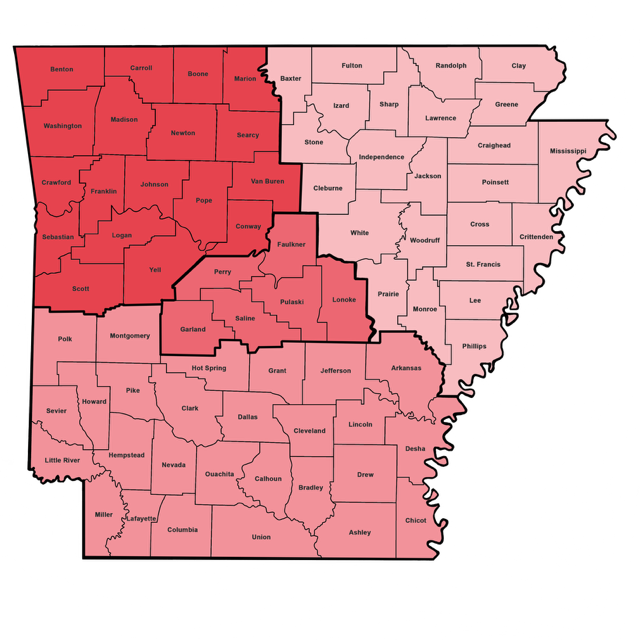
Some online Q&A sessions have already been held to discuss the new projected maps and the redistricting process. This information will be shared again at this spring’s five district conferences, which will be held online. The five districts will also elect equalization (at-large) lay members of the Annual Conference to participate in the June 2024 session of the Arkansas Annual Conference.
Then, at the annual conference session, the following items will be presented to the body for approval: the redistricting plan for four districts, District and Conference budgets, and new conference nominations for two of the three governing boards that each district has: District Committees on Ministry and District Boards of Church Location and Building.
Finally, in July or August 2024, the four districts will have celebratory “Constituting” District Conferences to welcome new and old friends while also tending to business, such as electing members of the governing District Leadership Boards, considering any endowment clarifications, and considering district second-mile missional giving.
Bishop Merrill stated, “I believe our proposed redistricting plan is one that will distribute and employ our resources well. Districts are one of the ways we organize ourselves, but the important thing will be the relationships and collaboration we develop with each other. I look forward to strong new district teams in the Arkansas Conference of the United Methodist Church, doing and living ministry together for the purposes of Christ.”